Introduction to Pendulum Testing for Protective Films
Protective Films play an important role in modern packaging, electronics protection, surface protection, and industrial applications. These films must provide reliable protection against mechanical damage during transportation, handling, and use. Although protective films are usually lightweight and flexible, they often experience sudden impact forces that may cause puncture, tearing, or complete failure.
To evaluate whether a film can withstand these unexpected forces, manufacturers use Pendulum Testing as an effective impact evaluation method. This testing method measures the energy required to break and penetrate a film specimen under controlled impact conditions.
For packaging and flexible film manufacturers, understanding impact performance is essential for material selection, product development, and quality control. A film with insufficient impact resistance may fail during real-world applications, while excessive material thickness may increase production costs. Therefore, accurate impact testing helps achieve a balance between protection performance and material efficiency.
Pendulum Testing | spencer impact testing equipment | ASTM D3420 Evaluation Method
Pendulum Testing is a mechanical impact test method designed to measure the toughness and impact resistance of thin plastic films and flexible packaging materials. According to ASTM D3420, the test determines the energy required for a pendulum-driven probe to burst and penetrate a film specimen.
The test principle is based on the conversion of potential energy into impact energy. A pendulum with a rounded probe strikes the center area of a film sample mounted between two plates. The energy lost by the pendulum during penetration represents the impact energy absorbed by the material.
Spencer impact testing equipment is commonly associated with this testing principle because the Spencer method provides a practical way to evaluate dynamic impact behavior of films used in packaging applications.
ASTM D3420 describes two procedures:
Procedure A
- Uses a specimen with a smaller opening diameter
- Suitable for general film impact evaluation
- Provides impact energy data under specified conditions
Procedure B (Spencer Procedure)
- Uses a larger specimen diameter
- Commonly known as the Spencer impact method
- Designed for evaluating film materials with different impact characteristics
The two procedures have different specimen conditions, and results obtained from each procedure should not be directly compared unless testing conditions are equivalent.
Why Impact Resistance Testing Is Important for Protective Films
그리고 impact resistance of Protective Films directly affects their reliability in practical applications.
During transportation or use, protective films may experience:
- Sudden external impacts
- Contact with sharp objects
- Mechanical stress during installation
- Handling damage
A film with good impact resistance can absorb external energy without immediate failure.
Pendulum Testing provides manufacturers with quantitative information about:
- 소재 인성
- Resistance to sudden impact
- Film formulation performance
- Production consistency
Unlike slow-speed tensile tests, impact testing evaluates material behavior under a much higher deformation rate. This makes the results more representative of real situations where films experience sudden forces.
Principle of ASTM D3420 Pendulum Impact Testing
The working principle of ASTM D3420 is based on measuring the energy required to penetrate a film sample.
During the test:
- The film specimen is mounted securely between two circular plates.
- A pendulum with a rounded impact head is positioned at a defined starting height.
- The pendulum is released and strikes the center of the specimen.
- The impact energy absorbed by the film is calculated from the energy loss of the pendulum.
The rounded probe passes through the specimen during impact, creating failure by stretching, tearing, and penetration.
The pendulum head reaches a high impact speed, allowing the test to evaluate the dynamic tensile behavior of the film. This characteristic makes the method suitable for protective films and packaging materials that require resistance against sudden damage.
Factors Affecting Pendulum Testing Results
Several factors influence the accuracy and repeatability of Pendulum Testing results.
Film Thickness
Thickness affects impact performance, but ASTM D3420 indicates that impact resistance does not have a simple proportional relationship with thickness. Two films with similar thickness values may show different impact behavior due to differences in polymer structure and manufacturing processes.
Material Composition
Different polymers, additives, and processing methods influence film toughness. For example, polyethylene-based films and polypropylene-based films may demonstrate different impact characteristics.
Manufacturing Process
Extrusion conditions, orientation ratio, cooling conditions, and internal stress distribution affect the final impact performance of Protective Films.
Sample Preparation
Consistent specimen size, clamping condition, and environmental conditions are important for reliable results.
Proper control of these factors ensures that Pendulum Testing data accurately represents material performance.
Testing Procedure Using Spencer Impact Testing Equipment
A typical Pendulum Testing process includes several important steps.
First, prepare film specimens according to the selected ASTM D3420 procedure. The samples should be free from visible defects and prepared with consistent dimensions.
Next, install the specimen between the testing fixtures. The clamping system must hold the film firmly without introducing unnecessary stress.
The pendulum impact system is then adjusted according to the required impact energy range. After releasing the pendulum, the instrument records the energy absorbed during film failure.
Multiple specimens are normally tested to obtain reliable statistical results. The average impact energy provides a more accurate representation of Protective Films performance.
Application of Pendulum Testing in Packaging and Film Development
Pendulum Testing is widely used in industries where film durability is critical, including:
- Flexible packaging
- Protective surface films
- Food packaging materials
- Medical packaging
- Industrial films
- Electronic protection films
Manufacturers use impact testing results to optimize material formulations, compare suppliers, and improve product reliability.
For quality control laboratories, selecting appropriate spencer impact testing equipment helps ensure repeatable testing conditions and reliable evaluation results.
Cell Instruments PIT-01 Film Pendulum Impact Tester for Film Evaluation
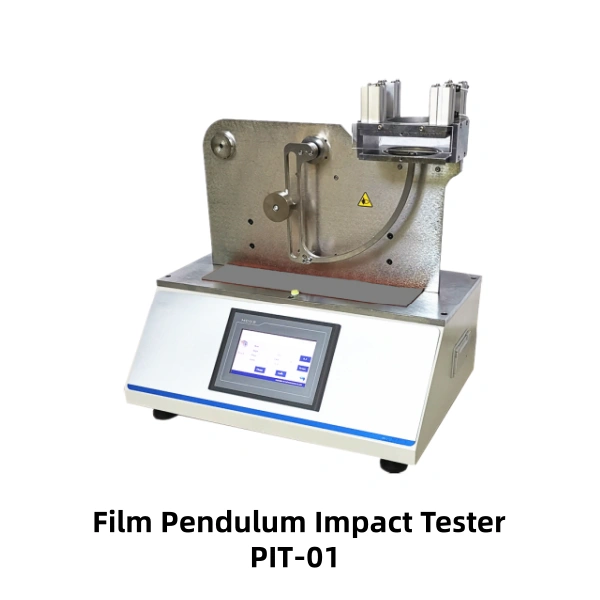
For laboratories requiring accurate film impact evaluation, the Cell Instruments PIT-01 Film Pendulum Impact Tester provides a professional solution for Pendulum Testing applications.
The instrument is designed to evaluate the impact strength of plastic films and flexible packaging materials based on standardized testing principles. It provides controlled pendulum movement, stable impact conditions, and accurate energy measurement, making it suitable for Protective Films quality evaluation.
By applying reliable impact testing equipment, manufacturers can better understand material behavior, improve product design, and maintain consistent quality standards.
Improving Protective Films Performance Through Advanced Impact Testing
As Protective Films continue to be used in demanding applications, manufacturers need reliable methods to evaluate their mechanical performance. Impact failure often occurs suddenly, and traditional testing methods may not fully represent real application conditions.
Through Pendulum Testing based on ASTM D3420, companies can obtain valuable information about film toughness and impact resistance. Combined with proper material selection and production control, impact testing supports the development of stronger, more reliable protective film products for modern packaging and industrial applications.
 KO
KO  EN
EN  AR
AR  BG
BG  CS
CS  DA
DA  DE
DE  EL
EL  ES
ES  ET
ET  FI
FI  FR
FR  HU
HU  ID
ID  IT
IT  JA
JA  LT
LT  LV
LV  NB
NB  NL
NL  PL
PL  PT
PT  RO
RO  RU
RU  SK
SK  SL
SL  SV
SV  TR
TR  UK
UK